In recent years, the world of esports has undergone an extraordinary transformation. What was once a niche hobby for a few devoted gamers has grown into a multi-billion-dollar industry. Competitive gaming, commonly known as esports, has emerged as a global entertainment force that rivals traditional sports in terms of viewership, investment, and cultural impact. With its own leagues, professional teams, sponsorships, and a dedicated fanbase, esports is no longer just about playing video games—it’s a career, a lifestyle, and a worldwide phenomenon.
This blog post takes a deep dive into the history, growth, and future of esports, examining the factors that have contributed to its rise, the key players who have shaped it, and the innovations that continue to drive the industry forward.
The Humble Beginnings: The Birth of Competitive Gaming
Esports may feel like a modern invention, but its roots can be traced back several decades. The first notable instances of competitive gaming can be found in the 1970s and 1980s, when games like Space Invaders and Pong captivated arcade goers. In 1980, the Space Invaders Championship was held in the United States, attracting over 10,000 participants. While this event was a small-scale affair, it marked the beginning of competitive gaming.
However, it wasn’t until the late 1990s and early 2000s that esports truly began to gain momentum. With the rise of the internet and the popularity of multiplayer online games, games like Quake, StarCraft, and Warcraft III laid the foundation for the competitive gaming scene. These games introduced the concept of online play, where players could compete against one another from the comfort of their homes.
Around the same time, the first major esports tournaments began to take place. Events like The Cyberathlete Professional League (CPL), founded in 1997, and The World Cyber Games (WCG), established in 2000, were among the first to bring esports into the spotlight. These tournaments were groundbreaking for their time, offering substantial cash prizes and attracting competitors from around the globe.
The Rise of Esports in the 2000s
As internet infrastructure improved, the esports scene began to expand rapidly. The 2000s saw the birth of iconic titles that would become synonymous with competitive gaming. StarCraft became a sensation in South Korea, where it gained a cult following, and the country’s national television began broadcasting StarCraft matches. The Korean esports scene, led by games like StarCraft: Brood War, became the epicenter of competitive gaming during this time.
Esports in South Korea was revolutionized by the establishment of the Korean e-Sports Association (KeSPA) in 2000, which helped organize and promote professional tournaments. StarCraft players became national celebrities, with matches drawing millions of viewers. The growth of esports in South Korea was so profound that it influenced other regions to take competitive gaming seriously.
Meanwhile, in the West, games like Counter-Strike, Warcraft III, and Dota began to gain popularity in esports circles. The formation of organizations like Team Liquid and Fnatic in Europe marked the beginning of professional gaming teams that would compete in major tournaments. By the mid-2000s, global esports events like The International, which began in 2011 as a Dota 2 tournament, set the stage for the multi-million-dollar prize pools that we see today.
The 2000s also witnessed the rise of the streaming platform Twitch in 2011, which provided a platform for gamers to broadcast their gameplay to an international audience. Twitch revolutionized esports by offering a live stream of tournaments and allowing fans to interact with players in real-time. Streaming quickly became a core component of the esports ecosystem, making it easier for fans to follow their favorite players, teams, and events.
The Growth of Esports in the 2010s: A Global Phenomenon
By the 2010s, esports was no longer a fringe activity— it was a global cultural phenomenon. The industry’s revenue grew exponentially, with global esports revenues reaching $1.1 billion by 2019. This growth was driven by several factors, including an increase in the number of professional teams, the growth of esports-related content on platforms like Twitch and YouTube, and the rise of major sponsorship deals.
The Rise of Major Esports Titles
In the 2010s, the landscape of competitive gaming was dominated by a few major titles. Games like League of Legends, Dota 2, Counter-Strike: Global Offensive (CS:GO), Overwatch, and Fortnite became staples of the esports world.
League of Legends (LoL) was one of the most influential titles in the industry during this period. Developed by Riot Games and released in 2009, LoL quickly became the game of choice for competitive players worldwide. Riot Games organized the League of Legends World Championship, which became one of the most-watched esports events globally, attracting millions of viewers each year. The annual championship featured teams from all over the world and boasted prize pools worth millions of dollars, making it one of the most lucrative esports tournaments.
Similarly, Dota 2, developed by Valve, became another iconic title in competitive gaming. The International (TI), Dota 2’s flagship tournament, became known for its massive prize pools, which reached over $40 million in recent years. TI was a defining moment for competitive esports, with incredible storylines and intense competition bringing esports into the mainstream.
Another major title that defined esports in the 2010s was Counter-Strike: Global Offensive (CS:GO). Released in 2012, CS:GO quickly became one of the most popular first-person shooter games in the esports world. Its professional leagues, tournaments, and the rise of legendary teams like Astralis and SK Gaming brought attention to esports in a way that hadn’t been seen before.
Meanwhile, Overwatch, Blizzard’s team-based first-person shooter, introduced a fresh and unique dynamic to competitive gaming when it launched in 2016. The creation of the Overwatch League (OWL) in 2018, with city-based franchises, was a major step in bringing esports closer to the structure of traditional sports.
Finally, Fortnite took the world by storm when it introduced the battle royale genre to a mainstream audience. Its competitive tournaments, such as the Fortnite World Cup, attracted massive viewership and prize pools, proving that esports could cater to a wide range of games and audiences.
The Professionalization of Esports
As esports grew, so did its professionalization. Traditional sports organizations began to take notice, and many of them sought to get involved in the esports ecosystem. This led to the creation of partnerships between esports organizations and traditional sports teams. For example, NBA teams such as the Dallas Mavericks and Golden State Warriors invested in esports teams and players. Similarly, traditional media outlets began broadcasting esports events, bringing them into the mainstream.
Esports organizations also began to resemble professional sports teams, with coaches, analysts, and support staff helping players improve their performance. The structure of esports organizations became more like that of traditional sports franchises, with players signing contracts, receiving salaries, and competing in structured leagues and tournaments.
The Role of Streaming and Content Creation
Twitch continued to be a key player in the rise of esports during the 2010s. The platform allowed fans to watch tournaments live and interact with players and commentators in real-time. Streaming became a lucrative career path for many players, with top streamers earning millions of dollars through subscriptions, donations, and sponsorships.
The popularity of streamers like Ninja (Tyler Blevins), Shroud, and Dr Disrespect brought attention to the potential of live streaming as a full-time profession. These streamers not only played games professionally but also created content around esports, such as game analysis, interviews, and commentary, further pushing esports into the mainstream.
Esports Today: A Billion-Dollar Industry
As we move into the mid-2020s, esports has firmly established itself as a major part of the global entertainment landscape. The esports industry is expected to surpass $1.5 billion in revenue by 2023, driven by advertising, sponsorships, media rights, and merchandise sales.
Global Events and Stadiums
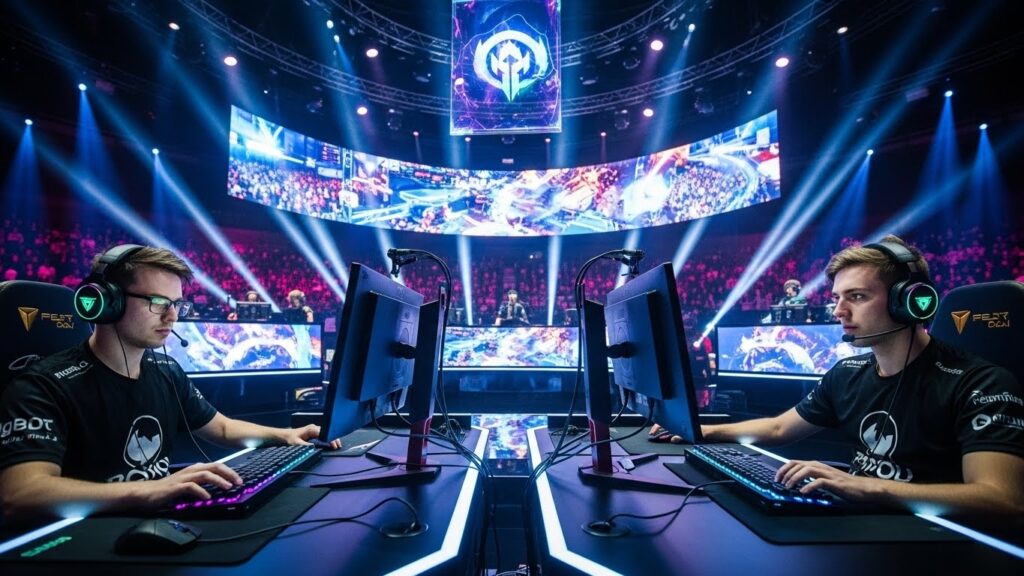
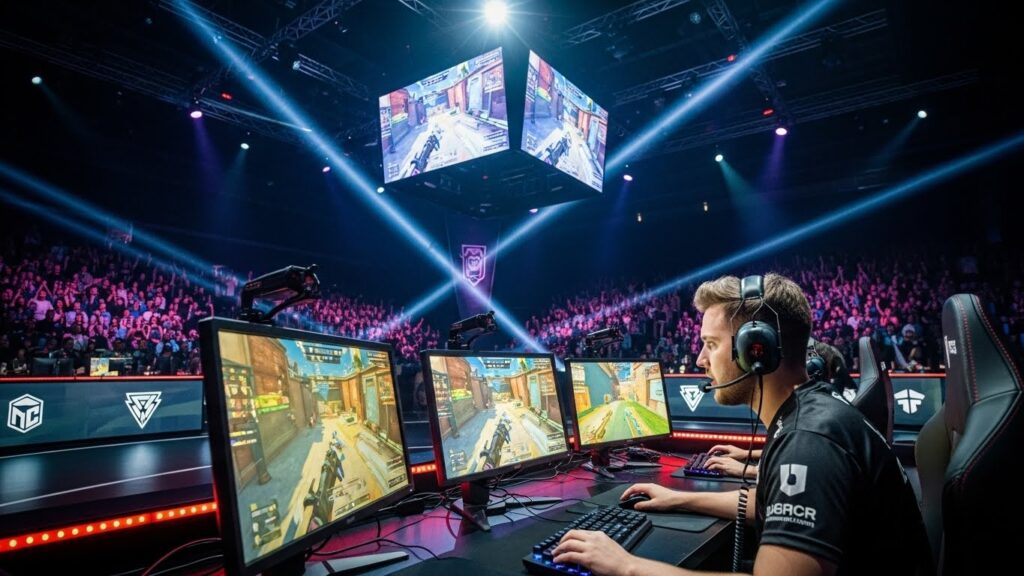
Esports events are now being held in large stadiums and arenas around the world, drawing thousands of fans. The League of Legends World Championship alone attracts over 100 million viewers during its month-long run. Some of the most prestigious esports tournaments are now held in iconic venues such as the Madison Square Garden in New York and the Staples Center in Los Angeles. These events are now a spectacle, with live performances, celebrity appearances, and global media coverage.
The Growing Role of Women in Esports
While esports has historically been a male-dominated field, there has been a growing movement to make the space more inclusive and welcoming to women. Female esports players and teams are gaining recognition, and initiatives such as women-only tournaments and leagues are helping to break down barriers. This is important not only for diversity and inclusion but also for the continued growth of the esports community.
The Future of Esports
Looking ahead, the future of esports appears bright. Advancements in technology, such as virtual reality (VR) and augmented reality (AR), could open new avenues for esports experiences. Additionally, the continued integration of esports into mainstream media could see it become a regular feature on television, with dedicated esports channels and live broadcasts becoming more common.