Introduction: The Rise of a Digital Colosseum
Once considered a casual pastime reserved for teenagers and hobbyists, esports has transformed into a global phenomenon that rivals traditional sports in scale, influence, and economic impact. Competitive gaming now fills stadiums, commands millions of online viewers, and produces professional athletes whose training schedules, fan followings, and financial rewards mirror those of footballers or basketball stars. Esports is no longer just about playing games; it is about entertainment, culture, technology, and a new definition of competition in the digital age.
This blog explores the evolution of esports, its structure, cultural relevance, economic ecosystem, and future potential. By understanding esports as more than games on a screen, we can see how it has become one of the most influential industries of the twenty first century.
The Origins of Esports: From Arcades to Arenas
The roots of esports stretch back several decades. In the early days of video gaming, competition was informal and localized. Arcade high score battles and small tournaments laid the groundwork for what would later become organized competitive gaming. As home consoles and personal computers became more powerful, multiplayer gaming moved online, allowing players from different regions to compete in real time.
The late nineteen nineties and early two thousands marked a turning point. Games designed specifically for competitive play began to emerge, and early tournaments attracted sponsorships and media attention. What started as small community driven events gradually evolved into professional leagues with standardized rules, prize pools, and global audiences.
Understanding Esports: What Sets It Apart
Esports refers to organized, competitive video gaming where individuals or teams compete in structured tournaments and leagues. Unlike casual gaming, esports demands a high level of skill, strategy, teamwork, and mental discipline. Professional players often specialize in a single game, dedicating thousands of hours to mastering mechanics, tactics, and decision making.
What sets esports apart from traditional sports is its close relationship with technology. Game developers play an active role in shaping the competitive environment through updates, balance changes, and new content. This dynamic nature keeps esports constantly evolving, ensuring that no competitive season is ever exactly the same as the last.
Popular Esports Genres and Their Appeal
Esports is not defined by a single type of game. Instead, it encompasses a wide range of genres, each with its own audience and competitive structure.
First person shooters emphasize precision, reflexes, and teamwork. These games are fast paced and visually intense, making them popular with both players and spectators. Strategy based games focus on long term planning, resource management, and adaptability. Matches often resemble a chess battle played at high speed, where a single mistake can determine the outcome. Sports simulations recreate real world athletics, attracting fans who enjoy the blend of traditional sports knowledge and digital competition.
This diversity allows esports to appeal to a broad audience, from casual viewers to dedicated analysts who study every move and strategy.
The Life of a Professional Esports Player
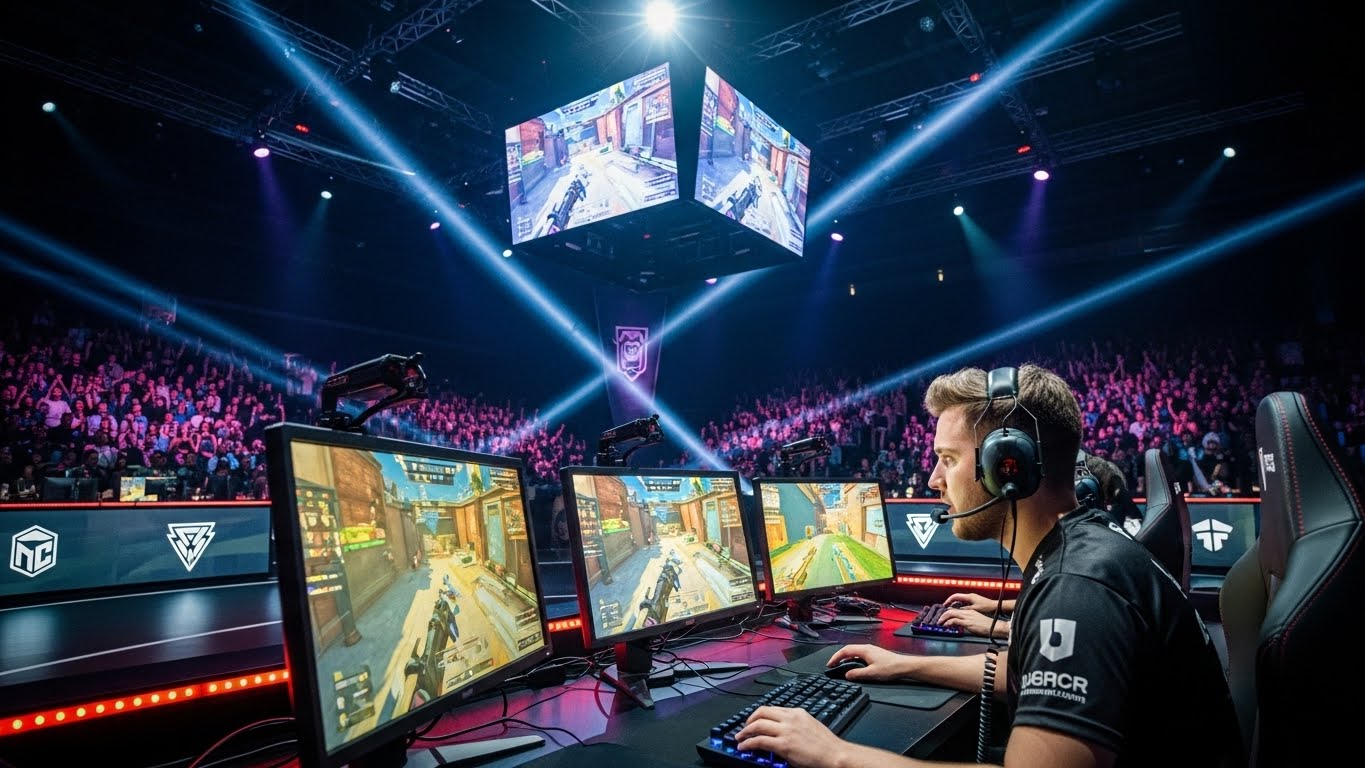
Behind the flashy lights and roaring crowds lies a demanding lifestyle. Professional esports players train for many hours a day, often following strict schedules that include practice sessions, strategy discussions, physical exercise, and mental conditioning. Contrary to the stereotype of gamers as inactive, many teams now emphasize fitness and health to improve focus and endurance.
Teamwork is another crucial element. In team based games, communication and trust are just as important as individual skill. Players must learn to work together under intense pressure, adapting quickly to opponents and unexpected situations.
The career span of an esports player can be relatively short, as reaction time and adaptability play a significant role. As a result, many players plan for life after competition by transitioning into coaching, content creation, or management roles within the industry.
Esports as Entertainment and Culture
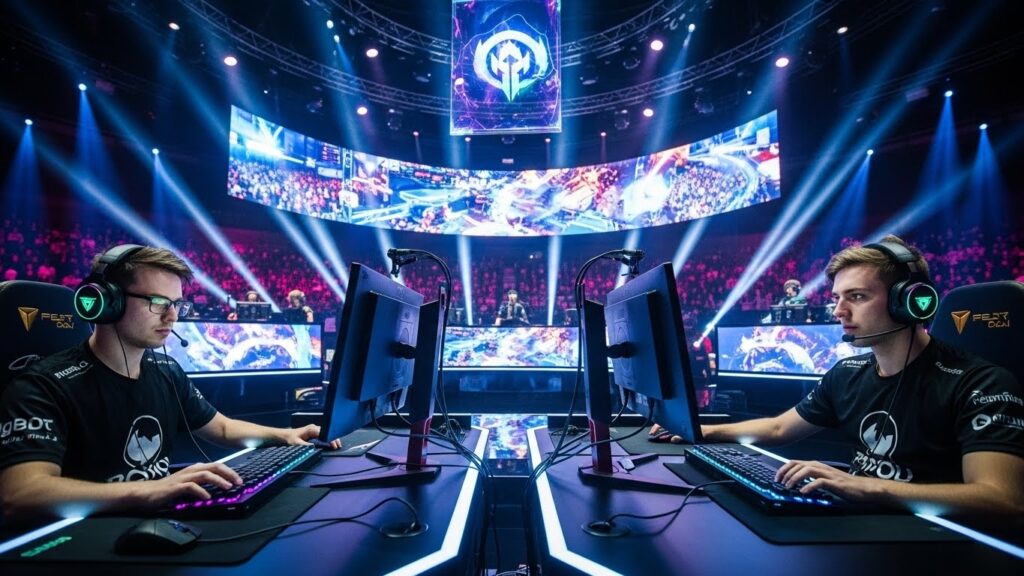
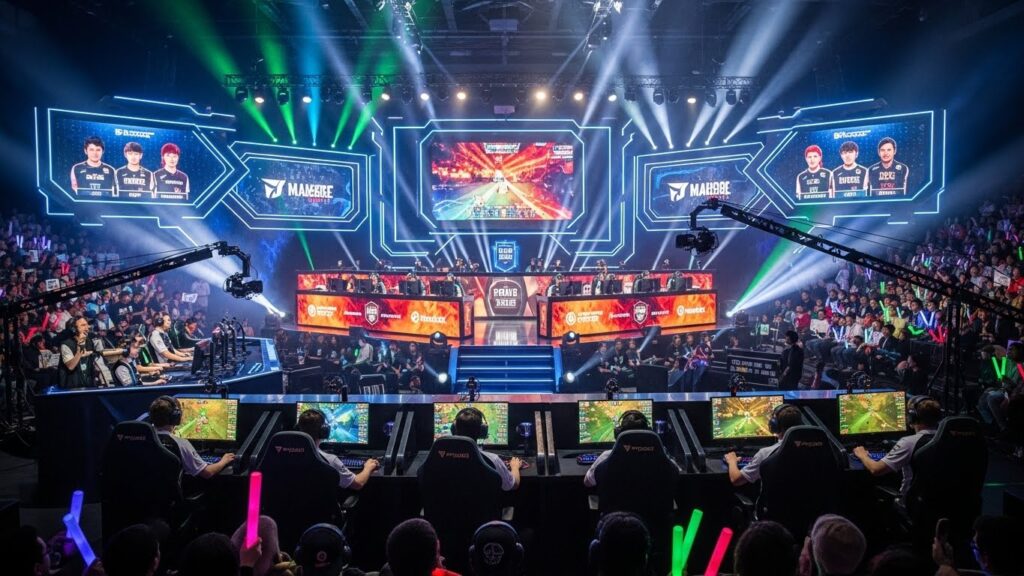
Esports is not just a competition; it is a form of entertainment deeply embedded in modern digital culture. Live broadcasts feature professional commentators, analysts, and high quality production that rivals traditional sports coverage. Fans engage through live chats, social media discussions, and fan created content, creating a sense of community that extends beyond the game itself.
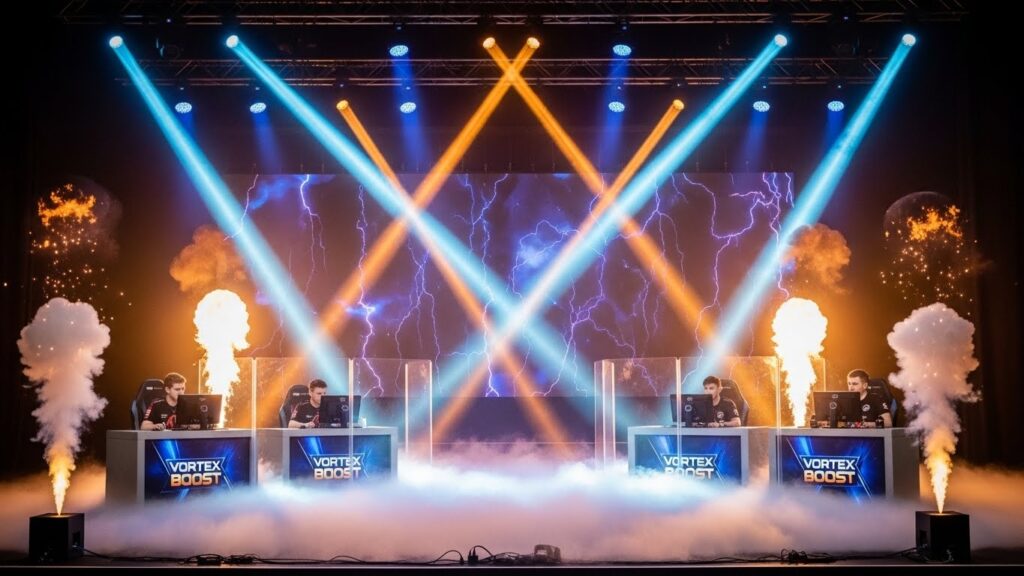
Esports events often include opening ceremonies, music performances, and elaborate stage designs. These elements turn tournaments into spectacles that celebrate gaming culture as a whole. For many fans, supporting an esports team is not just about winning but about identity, belonging, and shared passion.
The Business of Esports: A Growing Economy
The esports industry has developed a complex and rapidly expanding economic ecosystem. Revenue streams include sponsorships, advertising, media rights, merchandise, ticket sales, and in game purchases. Major brands from outside the gaming world have entered esports, recognizing its ability to reach younger, digitally savvy audiences.
Teams and organizations operate as businesses, with staff dedicated to marketing, operations, and player management. Leagues and tournament organizers negotiate broadcast deals and partnerships, further professionalizing the industry.
Investment in esports has also come from traditional sports organizations, celebrities, and venture capital firms. This influx of capital has accelerated growth while raising important questions about sustainability, governance, and long term planning.
Esports and Education: New Opportunities for Learning
Esports has begun to influence education in unexpected ways. Schools and universities around the world now offer esports programs, scholarships, and dedicated facilities. These initiatives recognize that competitive gaming can develop valuable skills such as teamwork, problem solving, communication, and technological literacy.
Academic programs related to esports management, production, and game design prepare students for careers within the industry. This integration of esports into education reflects its growing legitimacy and long term potential.
Challenges Facing the Esports Industry
Despite its success, esports faces several challenges. Player burnout is a significant concern, as intense training schedules and constant competition can lead to physical and mental strain. Ensuring fair play and combating cheating remain ongoing issues, particularly in online competitions.
Governance is another complex area. Unlike traditional sports, esports does not have a single global governing body. Different games and leagues operate under their own rules, which can lead to inconsistencies and disputes. Balancing the interests of players, teams, developers, and organizers requires careful negotiation and transparent decision making.
The Global Impact of Esports
Esports has become a truly global phenomenon. Players and teams from different continents compete on equal footing, united by shared digital platforms. International tournaments showcase cultural diversity while fostering cross border connections.
In regions where traditional sports infrastructure may be limited, esports offers an accessible path to global recognition. All that is required is talent, dedication, and a stable internet connection. This accessibility has helped esports grow rapidly in emerging markets and connect communities worldwide.
The Future of Esports: What Lies Ahead
The future of esports is filled with possibilities. Advances in technology such as virtual reality, augmented reality, and artificial intelligence may redefine how games are played and experienced. Enhanced data analytics could deepen strategic understanding, while new broadcasting methods may further blur the line between player and spectator.
As esports continues to mature, issues of player welfare, governance, and inclusivity will become increasingly important. Addressing these challenges will determine whether esports can sustain its growth and solidify its place alongside traditional sports.
Conclusion: A New Era of Competition
Esports represents a fundamental shift in how we define sport, competition, and entertainment. It combines the passion of athletic rivalry with the creativity of digital technology, creating an experience uniquely suited to the modern world. What began as simple games played for fun has evolved into a global industry that shapes culture, business, and human connection.
As esports continues to grow, it invites us to rethink old assumptions and embrace new forms of excellence. In this digital arena, skill, strategy, and imagination come together, proving that competition does not need a physical field to capture the hearts of millions.