Introduction
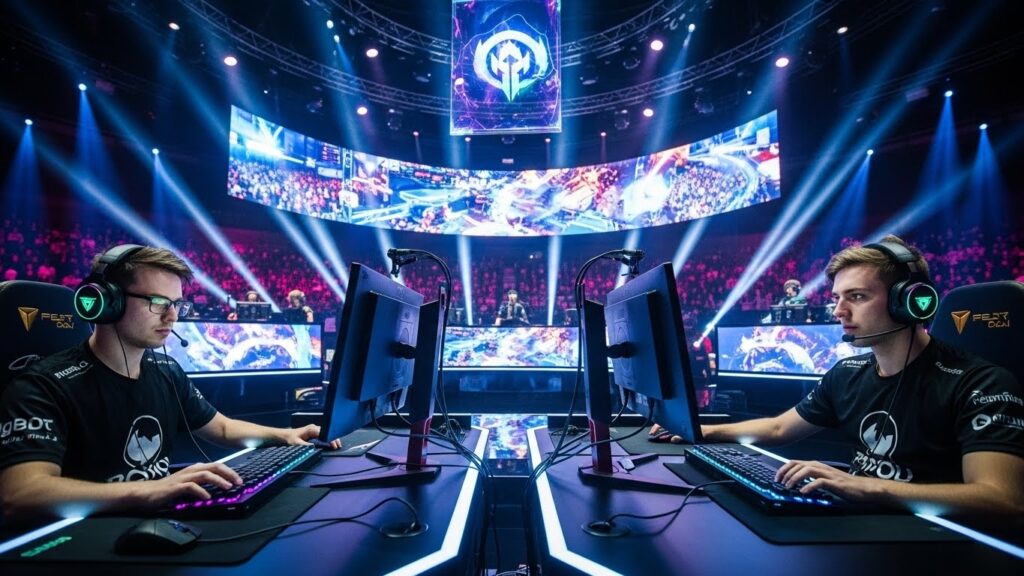
The world of competitive gaming, once a small and niche subculture, has evolved into a global phenomenon that captivates millions of fans worldwide. Esports, or electronic sports, has transitioned from being a pastime enjoyed by a dedicated few to a multi-billion-dollar industry with professional players, international tournaments, and corporate sponsorships. Today, competitive gaming rivals traditional sports in terms of viewership, fan engagement, and financial impact. This blog delves into the origins, growth, and future of esports, examining how it went from being a recreational activity to becoming an international entertainment powerhouse.
The Early Days of Esports
Esports, in its infancy, began as a grassroots movement. The origins of competitive gaming can be traced back to the early 1970s, with the creation of arcade games like Space Invaders, which sparked the first competitions. However, these early events were mostly informal, often held in local arcades or colleges, and lacked the structure that would later define professional esports. The 1990s marked a significant turning point, with the advent of networked multiplayer gaming. Games such as Doom and Quake allowed players to compete against each other online, and local LAN (Local Area Network) tournaments began to take off.
In 1997, the formation of the Cyberathlete Professional League (CPL) provided the first real structure for competitive gaming. This league, focusing on first-person shooters like Quake, helped establish competitive gaming as a serious endeavor. A few years later, the World Cyber Games (WCG), founded in 2000, further popularized esports on a global scale, offering international tournaments that attracted participants from all corners of the world. These early competitions laid the foundation for what would eventually become the global esports industry we know today.
The Rise of Global Competitions
As the internet became faster and more accessible in the 2000s, the potential for esports grew exponentially. The rise of massively multiplayer online games (MMOs) and team-based strategy games created new opportunities for large-scale online competitions. The introduction of StarCraft and Warcraft III saw the early days of esports as a global competition, particularly in South Korea, where games like StarCraft became national pastimes.
South Korea, in particular, became a hotspot for esports during the early 2000s. Thanks to the country’s robust internet infrastructure and government support, esports quickly became a cultural staple. StarCraft tournaments were broadcasted on national television, and players gained celebrity status. South Korea’s professional leagues set a global precedent for organizing esports events. The country also pioneered the concept of esports arenas, where fans could watch their favorite players compete live. This model became a blueprint for esports organizations around the world, creating a professional ecosystem that mirrored traditional sports leagues.
The Explosion of Esports in the 2010s
The real turning point for esports came in the 2010s, thanks in part to the proliferation of social media platforms and streaming services like Twitch. The ability to stream gameplay directly to viewers gave esports a new level of accessibility, and the esports audience grew exponentially as a result. In 2011, Twitch was launched as a platform dedicated to live-streaming gaming content, providing fans with real-time access to esports tournaments, casual play, and commentary. By 2014, Twitch had become the go-to platform for esports streams, and the site’s massive audience helped elevate competitive gaming to new heights.
Another key factor in the growth of esports was the rise of free-to-play games with competitive structures. Titles like League of Legends, Dota 2, Counter-Strike: Global Offensive, and Fortnite revolutionized esports by offering accessible entry points for players while providing a rich competitive environment. League of Legends, developed by Riot Games, played a particularly significant role in the global esports boom. The game’s annual World Championship became one of the biggest esports events in history, attracting millions of viewers and offering multi-million dollar prize pools.
The competitive scene for these games also began to mature. Professional teams formed, organized by esports organizations, who hired players, coaches, analysts, and support staff. Tournaments became larger in scope, with prize pools increasing to tens of millions of dollars. The International, an annual Dota 2 tournament organized by Valve Corporation, raised an astounding $40 million in prize money in 2021, demonstrating the massive financial stakes in esports. The rapid growth of esports during the 2010s established it as a viable industry capable of competing with traditional sports in terms of audience size, prize money, and revenue generation.
Esports as a Profession: The Rise of the Digital Athlete
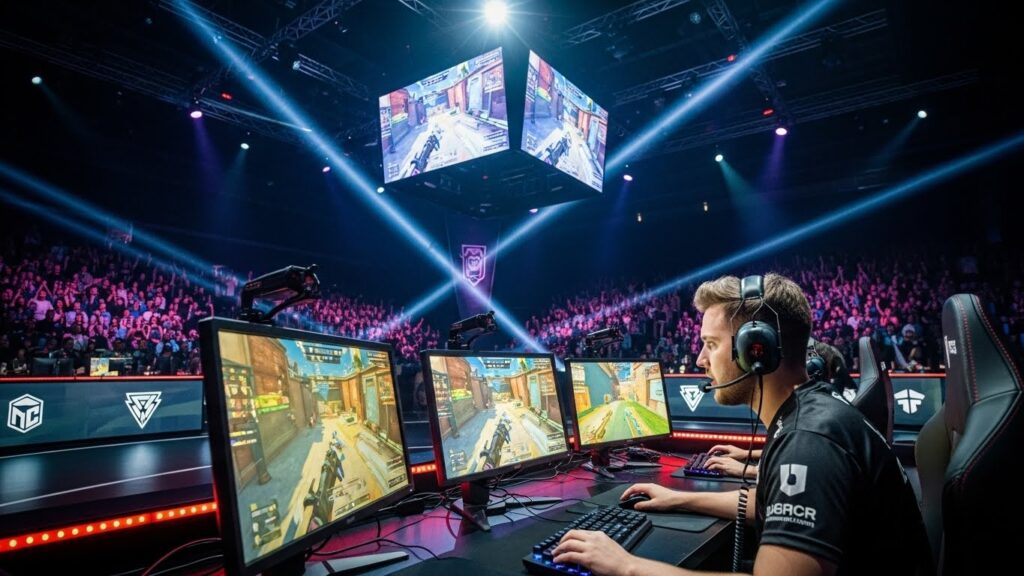
The increasing visibility of esports led to the professionalization of competitive gaming. As the industry grew, so did the recognition of esports players as professional athletes. Just like traditional sports, competitive gamers began to train intensively, working with coaches and analysts to improve their strategies and gameplay. Many professional esports players spend up to 12 hours a day practicing their skills, participating in scrims (practice matches), reviewing game footage, and discussing strategies with teammates.
In addition to their in-game performance, esports players also need to develop a personal brand to succeed in the industry. With social media platforms like Twitter, Instagram, and YouTube, players have the opportunity to connect directly with their fanbase and gain sponsorships. Many top esports players have turned streaming into a lucrative business, often earning as much or more than they do from tournament winnings. The most popular streamers, like Ninja (Tyler Blevins) and Shroud (Michael Grzesiek), have turned their gaming skills into massive online followings, attracting sponsorships from major brands such as Red Bull, Adidas, and Coca-Cola.
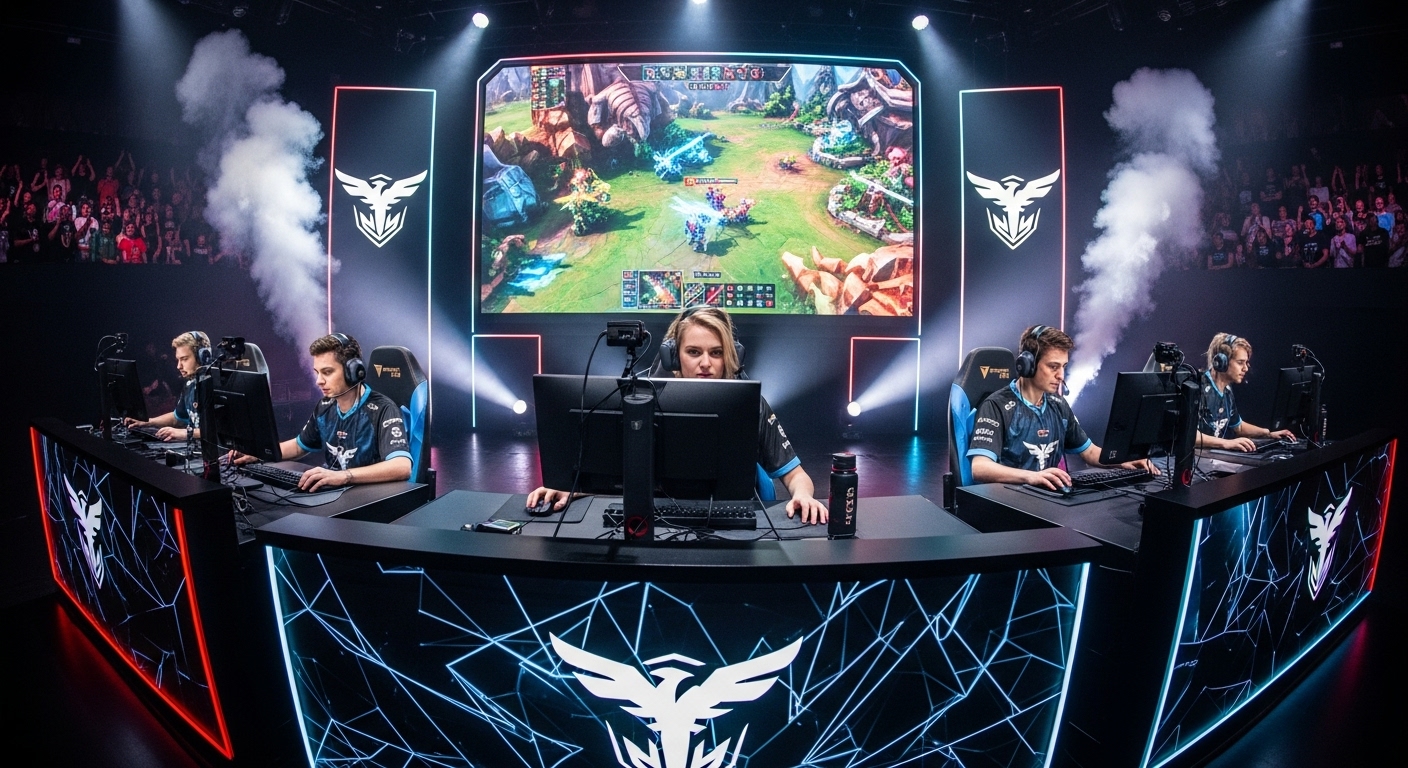
Just as in traditional sports, esports organizations sign contracts with top players, providing them with salaries, benefits, and the resources needed to train and compete at the highest level. Esports organizations like Team Liquid, Cloud9, G2 Esports, and Fnatic have become household names in the gaming world, signing sponsorship deals with tech companies, apparel brands, and even car manufacturers. These sponsorships not only provide funding for the teams but also help increase the visibility and legitimacy of esports as a professional sport.
The Global Fanbase: How Esports Engages Millions of Viewers
One of the key drivers behind the rise of esports is its massive and engaged fanbase. Unlike traditional sports, esports has a truly global audience. The accessibility of online streaming means that fans can tune into tournaments and matches from anywhere in the world, allowing esports to transcend geographic and cultural boundaries. Esports fans can engage with their favorite teams, players, and commentators in real-time through live streams, social media platforms, and fan communities.
The connection between players and fans is a defining characteristic of esports. Fans are not just passive viewers—they actively interact with players on platforms like Twitch and YouTube, asking questions, sharing their opinions, and even donating money to their favorite streamers. This creates a strong sense of community and fan loyalty that is often absent in traditional sports, where the connection between players and fans can feel more distant.
Esports tournaments, such as the League of Legends World Championship, The International for Dota 2, and Overwatch League, attract millions of viewers both online and in-person. In 2020, the League of Legends World Championship had an average concurrent viewership of over 3 million, with the grand final being watched by over 100 million viewers. The large-scale broadcasts of these events are complemented by live commentary, player interviews, and analysis, creating an experience that mirrors traditional sports broadcasts.
The rise of esports has also led to the creation of esports bars, conventions, and fan meet-ups, where fans can gather to watch events together and socialize. The fan experience extends beyond just watching the tournaments; it has become a social event that connects fans, players, and industry professionals.
The Business of Esports: Sponsorships, Revenue, and Media Rights
Esports has become a billion-dollar industry, and the financial aspects of the sport are rapidly growing. Sponsorships are one of the primary revenue sources for esports organizations, with major brands investing heavily in competitive gaming. Companies from various industries—tech, automotive, beverage, and apparel—recognize the massive potential of esports as a marketing platform. This has led to a surge in corporate partnerships and sponsorships, with companies like Intel, Coca-Cola, Mercedes-Benz, and Nike sponsoring events, teams, and individual players.
In addition to sponsorships, esports generates revenue from ticket sales, merchandise, media rights, and advertising. Many major tournaments are now broadcast on television and streaming platforms, and broadcasting rights are sold to media companies for large sums. These revenue streams have allowed esports organizations to thrive, further cementing esports as a legitimate and profitable industry.
The growth of esports has also created opportunities for investors. As more esports leagues and teams emerge, venture capitalists are increasingly putting their money into the industry, seeing its potential for long-term growth. Investors are drawn to the global reach of esports, as well as the younger demographics it attracts. The expansion of esports into regions such as Asia, Latin America, and the Middle East has further increased the industry’s value, and the global market for esports is expected to continue growing in the coming years.
The Future of Esports: Innovation and Expansion
Looking ahead, the future of esports is bright. As new technologies like virtual reality (VR) and augmented reality (AR) become more mainstream, they have the potential to reshape the esports experience. VR, for example, could offer fully immersive gaming experiences where players and viewers can interact with the game in ways never before possible.