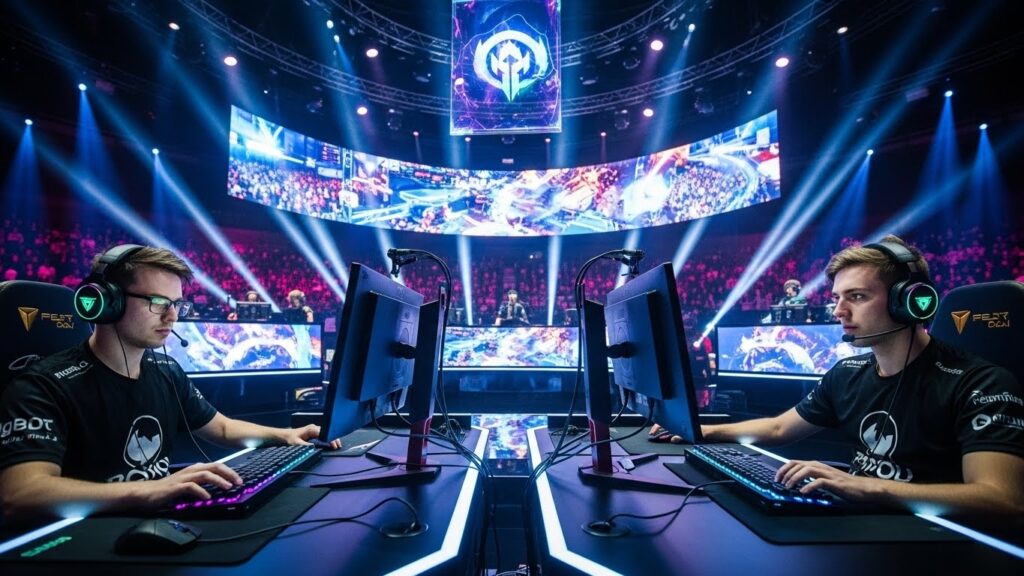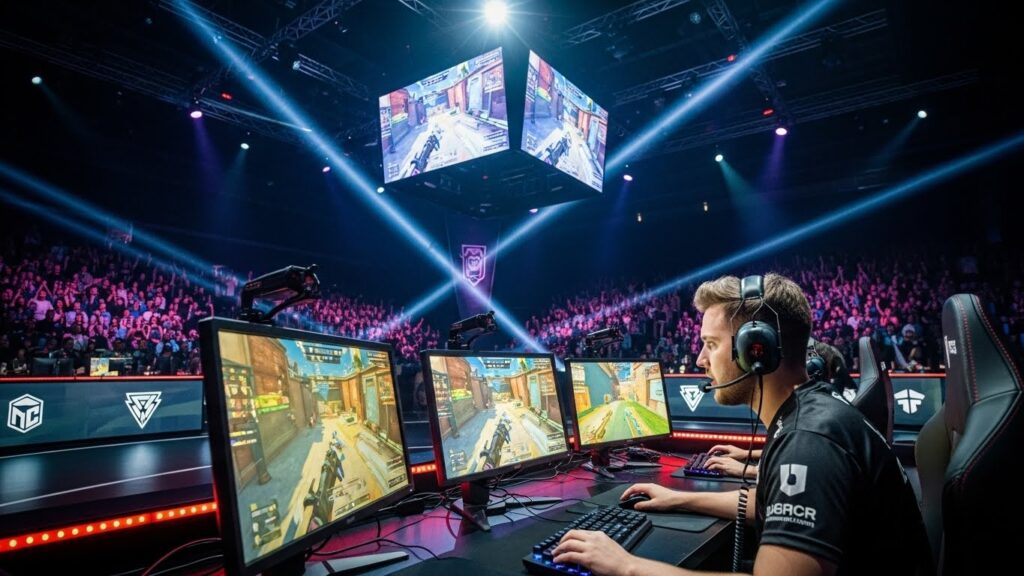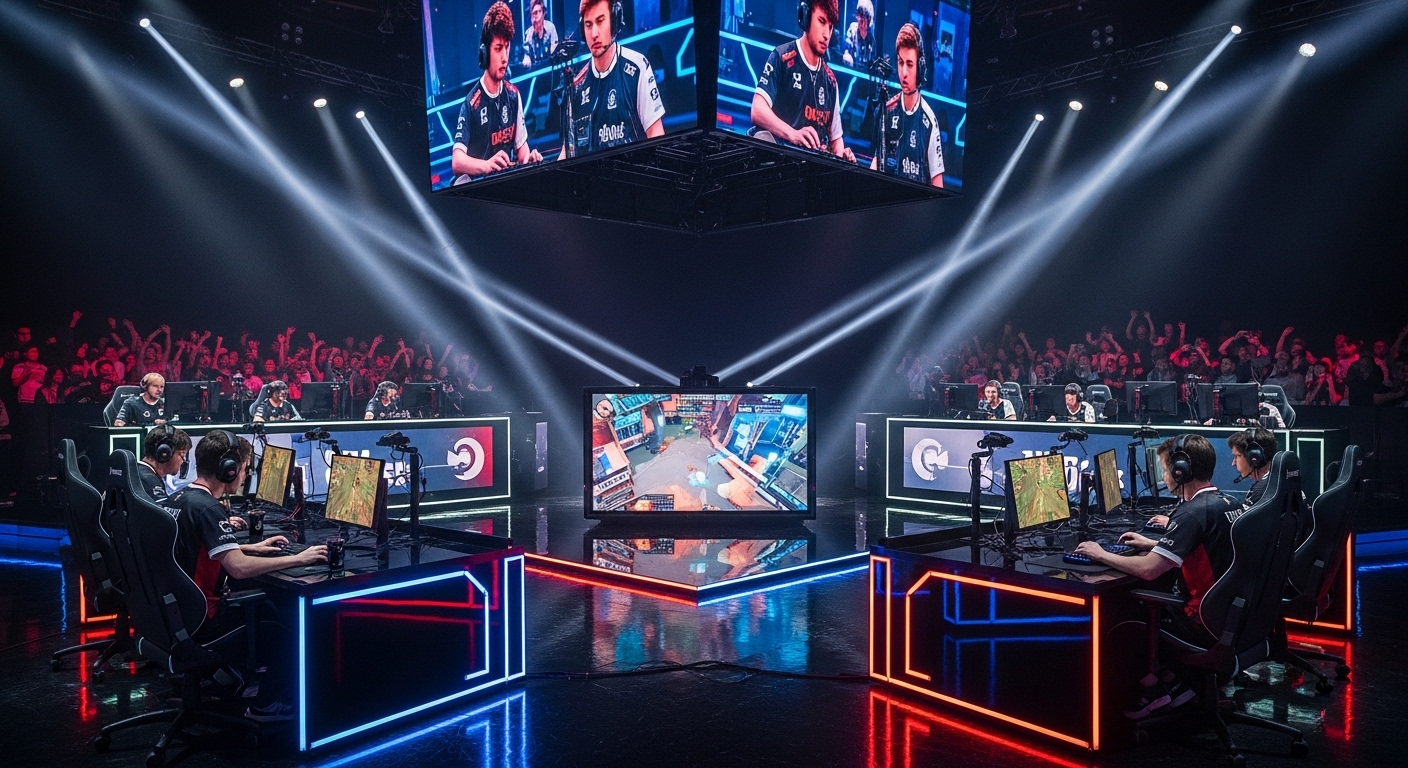
Esports, the competitive side of video gaming, has surged in popularity over the past decade, evolving from a niche hobby to a billion-dollar industry with millions of fans and players worldwide. As the digital world continues to influence every facet of our lives, esports stands out as a unique blend of technology, entertainment, and competition. Whether you are a gamer, a casual viewer, or simply curious about this rapidly growing industry, the world of esports is impossible to ignore. This blog post will take you through the journey of esports, explore its impact on the global entertainment industry, and look ahead to what the future holds for this exciting sector.
What is Esports?
At its core, esports refers to organized, multiplayer video game competitions. These tournaments feature professional players or teams who compete against each other for prizes, fame, and recognition. Esports spans a wide variety of games and genres, including real-time strategy games like StarCraft II, first-person shooters such as Call of Duty and Counter-Strike, and multiplayer online battle arena (MOBA) games like League of Legends and Dota 2.
The competitive nature of esports sets it apart from casual gaming. While casual gamers play for fun or relaxation, esports athletes (often referred to as “pro gamers”) train rigorously, perfecting their gameplay to compete at the highest levels. Esports competitions range from small online tournaments to massive international events that draw millions of viewers both in person and through online streams.
The Rapid Growth of Esports
Esports has undergone a dramatic transformation in the last two decades, with its growth fueled by advancements in technology, a global gaming community, and the rise of streaming platforms like Twitch and YouTube Gaming. What started as a niche activity among gamers has now become a mainstream form of entertainment, attracting millions of viewers, massive sponsorship deals, and multi-million-dollar prize pools.
Early Days: The Birth of Competitive Gaming
The roots of esports can be traced back to the late 1990s and early 2000s when competitive gaming first began to take shape. Early tournaments such as the Cyberathlete Professional League (CPL) and the World Cyber Games (WCG) helped lay the foundation for what would eventually become a global phenomenon. These events were relatively small in scale, but they captured the attention of a dedicated audience of gamers and fans.
Esports truly started to gain momentum in the mid-2000s with the launch of StarCraft: Brood War in South Korea. This game became a cultural phenomenon in the country, leading to the creation of professional leagues and television broadcasts dedicated to esports. The rise of League of Legends in 2009, along with other key titles, helped bring esports to a global audience, laying the groundwork for future growth.
Mainstream Success: The Era of Streaming and Sponsorship
A major turning point for esports came with the advent of streaming platforms like Twitch, which launched in 2011. Twitch allowed gamers to stream their gameplay live to a global audience, and quickly became the go-to platform for esports events. Fans could now watch live esports tournaments in real time from the comfort of their homes, interact with other fans, and support their favorite players and teams.
Esports began to attract attention from major corporations as well. Brands like Coca-Cola, Intel, and Red Bull saw the growing influence of esports and began to invest heavily in sponsorships, advertising, and partnerships with top esports organizations. This financial support enabled the esports industry to grow rapidly, with prize pools for tournaments reaching into the millions of dollars.
By the mid-2010s, major esports titles like League of Legends, Dota 2, and Counter-Strike: Global Offensive had become household names, and professional leagues and tournaments began to follow in the footsteps of traditional sports leagues. Today, the esports industry is estimated to be worth over $1 billion, and it continues to grow year after year.
The Esports Ecosystem: Teams, Players, and Competitions
Esports operates in a highly structured ecosystem with players, teams, organizers, sponsors, and fans all contributing to its success. The competitive gaming scene mirrors many aspects of traditional sports, with professional teams, coaches, and analysts working together to secure victories.
Professional Teams and Players
Esports is built around professional teams, who compete in various games and tournaments throughout the year. Much like traditional sports teams, esports organizations recruit talented players, sign sponsorship deals, and participate in global competitions. These teams often consist of five to six players who specialize in different roles within the game, and each member must collaborate to secure victories.
One of the biggest names in esports is Team Liquid, a well-known organization that fields teams in games like League of Legends, Dota 2, and CS:GO. Another prominent team, Fnatic, has a rich history in the League of Legends scene and is considered one of the best esports teams in Europe.
Professional players are highly skilled, and many of them dedicate countless hours to training and perfecting their strategies. The average professional gamer spends between eight and twelve hours per day practicing their skills, studying gameplay footage, and preparing for upcoming tournaments. This level of dedication is similar to the training routines of traditional athletes, and it has helped elevate esports to the level of a professional sport.
Tournaments and Leagues
Esports tournaments and leagues are the heart of the industry. These events are where players and teams showcase their skills, compete for prize money, and earn global recognition. Some of the most prestigious esports tournaments include The International (Dota 2), the League of Legends World Championship, The Overwatch League, and ESL Pro League (Counter-Strike: Global Offensive).
Esports leagues, much like traditional sports leagues, feature a regular season followed by playoffs and a grand final. Teams accumulate points throughout the season, and the top-performing teams qualify for prestigious events, where the stakes are high, and the competition is fierce.
The International, for example, is an annual Dota 2 tournament with one of the largest prize pools in esports history. In 2021, the prize pool exceeded $40 million, with the winning team taking home over $18 million. This massive prize money has helped make esports a legitimate career path for professional players.
The Business of Esports: Revenue Streams and Sponsorships
Esports is a highly lucrative industry, generating significant revenue from multiple sources. The most important revenue streams for esports include:
Sponsorships and Advertising
Sponsorships play a huge role in the financial success of esports. Major brands from industries like technology, energy drinks, and clothing have embraced esports sponsorships as a way to reach a younger, tech-savvy audience. Companies like Intel, Razer, Red Bull, and Coca-Cola have partnered with top esports teams and tournaments to promote their products.
Esports also attracts significant advertising revenue, as advertisers seek to engage with the growing audience of gamers and esports fans. Advertisers can place their logos and messages on team jerseys, in-game advertisements, or during tournament broadcasts, ensuring that their products reach millions of viewers.
Media Rights and Streaming
With the rise of streaming platforms like Twitch, YouTube Gaming, and Facebook Gaming, media rights have become another important revenue stream for esports organizations. These platforms pay to broadcast tournaments and events to a global audience, which helps generate significant revenue for both event organizers and teams. Fans can watch live esports competitions on these platforms, often for free, while advertisers and sponsors help support the cost of production.
Merchandise and Ticket Sales
Esports teams and organizations also generate revenue through the sale of branded merchandise, including jerseys, hats, and other team gear. Fans of professional players and teams proudly support their favorite organizations by purchasing these items. In addition, major esports tournaments and events often sell tickets to fans, who attend in person to watch the competition live. The sale of these tickets, combined with merchandise sales, creates additional streams of revenue for organizers and teams.
Esports and the Future: What Lies Ahead?
The future of esports looks incredibly bright, with the industry expected to continue its rapid growth in the coming years. There are several key trends and developments that will shape the future of esports:
Mobile Gaming
Mobile gaming is one of the fastest-growing segments of the gaming industry, and it’s making its way into esports. Games like PUBG Mobile, Mobile Legends, and Arena of Valor are rapidly gaining popularity, especially in regions like Southeast Asia, where mobile devices are the primary gaming platform. Mobile esports tournaments are already being held in major markets, and the sector is expected to grow significantly in the future.
Integration with Traditional Sports
Many traditional sports organizations are beginning to embrace esports as a legitimate form of competition. The NBA, for example, launched the NBA 2K League, a professional esports league based on the popular NBA 2K video game series. Similarly, other sports leagues like the FIFA eWorld Cup have launched their own esports tournaments. This integration of esports and traditional sports provides a unique opportunity to expand the reach of both industries.
Virtual Reality (VR) and Augmented Reality (AR)
Virtual reality and augmented reality have the potential to revolutionize the esports experience. These technologies offer players and spectators a more immersive and interactive environment, bringing esports to life in new ways. While VR and AR are still in the early stages of development, their potential for enhancing esports competitions and broadcasts is enormous.
Conclusion: Esports as a Cultural Phenomenon
Esports has come a long way since its early days as a casual gaming activity. Today, it stands as a global phenomenon, with a rapidly growing industry, millions of fans, and billions of dollars in revenue. Esports has evolved into a professional sport, with top players earning salaries and sponsorship deals, while major tournaments and leagues attract millions of viewers